
PVD vs Electroplating for Jewelry Manufacturing: What Brands Should Know
Brands often ask a version of the same question early in development: "Should we use PVD or electroplating?" It sounds like a simple either-or choice. In practice, the process name is only one input into a manufacturing decision. The base metal, the design, the target finish, the way the product will be worn, and the way color is approved all affect which route makes sense.
This guide is written for jewelry brands, product developers and sourcing teams who need to make that decision with a manufacturer, not for consumers comparing finished products.
Quick Answer
PVD and electroplating are two different surface-finishing processes. PVD (physical vapor deposition) takes place in a vacuum-based coating system. Electroplating deposits metal onto the surface electrochemically, in a plating bath. Both are used in jewelry manufacturing.
Neither is the automatic winner. Which one suits a project depends on the base material, the design, the target finish, expected wear, product geometry, production requirements, the sample approval standard and the commercial target. A sensible way to decide is to describe the product to your manufacturer first, then discuss which route fits and why.
What Is the Difference Between PVD and Electroplating?
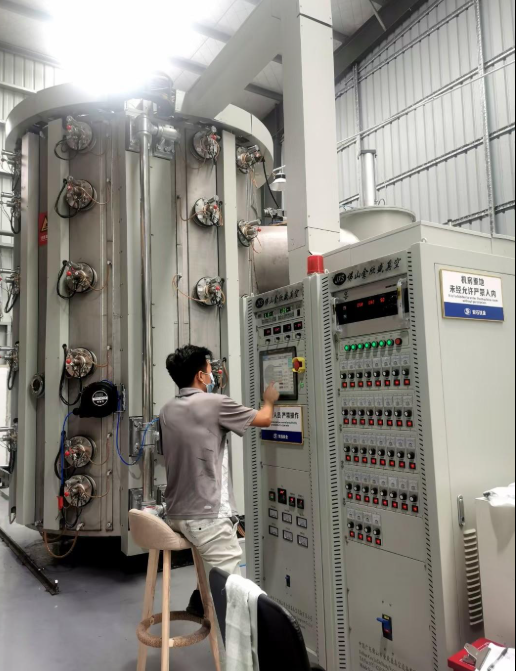
PVD. The coating material is vaporized inside a vacuum chamber and deposits as a thin film on the prepared pieces. Because the process happens in a chamber, how pieces are fixtured and how the coating reaches each surface matters.
Electroplating. The pieces are placed in a chemical bath and an electric current drives metal ions to deposit on the surface. The result depends on the bath, the way the electrical current reaches the piece, and often on the layers applied before the visible color layer.

Two points matter more to a buyer than the physics:
- Both processes add a finish on top of a prepared base metal. Neither can make up for a poor surface underneath.
- Both are controlled production processes. Results depend on how well the factory manages preparation, process settings, handling and finishing, not on the label alone.
PVD vs Electroplating: Key Differences for Jewelry Brands
The table below compares the two as manufacturing decisions. It deliberately avoids absolute numbers, because performance depends on the full product system.
| Decision factor | PVD | Electroplating | What to confirm with your manufacturer |
|---|---|---|---|
| Basic process | Vacuum-based coating | Electrochemical deposition in a bath | Which route the factory proposes and why |
| Typical jewelry discussion | Often considered for stainless steel and brass designs, and for color finishes such as black or rose gold | Used across many jewelry categories and base metals, including established gold-tone finishes | Whether the route suits your specific design and base metal |
| Base material | Suitability depends on the base metal and its surface condition | Suitability depends on the base metal and on the layer system beneath the visible finish | Which base metal is used and how it is prepared |
| Finish and color | Range of tones available, confirmed through a sample | Range of tones available, confirmed through a sample | Which exact color and finish, approved against what reference |
| Design and geometry | Coverage depends on how the coating reaches recesses, joints and details | Coverage depends on how plating reaches the same areas | Which areas of the design need special attention |
| Sample approval | Physical sample and color reference | Physical sample and color reference | How the approved sample is kept and used in bulk |
| Production consistency | Depends on batch planning, process control and the approved reference | Depends on bath control, process management and the approved reference | How bulk is checked against the sample |
| Wear | Depends on the whole system, not the process name | Depends on the whole system, not the process name | What wear conditions the product is designed for |
| Commercial factors | Depends on quantity, design complexity, color and sampling rounds | Depends on quantity, design complexity, finish system and sampling rounds | The full cost across sampling, bulk and rework risk, not only the process price |
A lower process price does not automatically mean a lower total cost, and a higher one does not automatically mean better value. The cost that matters includes sampling rounds, rejected batches and finish complaints later.
Base Metal Matters More Than Many Buyers Expect
Buyers often start with the coating and treat the base metal as a given. For the process decision, it works better the other way around.
Stainless steel (304, 316 and 316L) and brass are common base materials in jewelry, and they behave differently under finishing. Differences in surface condition, polishing response and how the material is worked before finishing can all change what the finished surface looks like, and what the manufacturer will recommend. For more on how stainless steel grades differ in jewelry, see 304 vs 316L Stainless Steel Jewelry.
If your product uses a different base metal, such as sterling silver, do not assume the same route applies. Process suitability should be confirmed project by project, with the factory, before it is written into a specification.
Product construction counts as well. Mixed-material pieces, soldered joints and components that will be adjusted after finishing can influence which route is practical. Tell the manufacturer early if a design needs resizing, soldering or other work after the finish is applied.
Design and Jewelry Geometry Can Influence the Decision
Both processes have to reach every visible surface of the piece. Recessed areas, joints, link interiors, engraved details and tightly spaced components can be harder to finish evenly, and each process has its own way of reaching those areas. For some designs one route may be easier to control than the other.
You do not need to resolve this on your own. Share the design and let the manufacturer flag the areas that need attention. For a closer look at how geometry affects coating coverage, see PVD Coating Jewelry Manufacturing.
Color and Finish: Why the Process Name Is Not Enough
“PVD gold” or “18K gold plated” does not by itself define a precise, reproducible color standard. Gold finishes can vary widely in tone, so brands should approve the actual color against a physical reference; the same principle applies to rose gold, black, silver, metallic, and other finishes.
What brands should confirm is the actual finish:
- a physical reference, such as a sample or color card, rather than a verbal description or a screen image;
- the finish type, such as polished, brushed or matte, because the same color can look different on different surface finishes;
- how the approved sample will be kept and used as the reference for bulk.
The same discipline applies to either process: approve color against something physical. Photos and screens vary too much to carry an approval.
Durability: Why PVD Is Not Automatically the Winner
PVD is often marketed as the more durable option. It can be a good fit for many products, but jewelry performance is not decided by the process name. Durability depends on the whole system:
- the base metal and its surface condition;
- surface preparation before finishing;
- the coating or plating system used;
- process control during production;
- friction at points where pieces rub against each other, clothing or skin;
- finishing and handling after the coating step;
- the wear conditions the product is meant for.
A well-controlled electroplated finish can outperform a poorly prepared PVD finish, and the reverse is also true. Treating PVD as "durable" and electroplating as "weak" hides the factors that actually decide results. The full set of factors is covered in Durable Gold Plating Jewelry.
When PVD May Be Worth Considering
PVD may be worth discussing when:
- the product is made from stainless steel or brass and the brand wants a finish route that suits those materials;
- the design calls for finishes such as black, rose gold, silver or metallic tones, or other colors that the brand wants to define through a physical reference;
- the geometry is relatively open, so coverage is easier to plan and check;
- the brand has specific color-consistency requirements and is prepared to approve a physical sample and hold production to it;
- the product is positioned around a PVD finish, and the brand wants the manufacturing route to match that positioning.
These are reasons to open the conversation, not rules. The manufacturer’s view on your specific design should still decide.
When Electroplating May Make More Sense
Electroplating may be the better route when:
- the brand already has an established gold-tone or other finish and wants new products to match existing electroplated pieces;
- the design or construction suits electroplating better, for example certain mixed-material pieces or components;
- the base material is one where the factory recommends a plating route after reviewing the design;
- the product’s commercial positioning, development schedule or order structure fits an electroplated finish;
- the brand wants to compare finish options during development before committing to one route.
None of this means electroplating is the lesser option. Plating performance depends on preparation and control just as much as PVD does.
What Brands Should Specify Before Choosing a Process
The more a manufacturer knows before recommending a route, the less guesswork goes into sampling. A useful brief includes:
- Product design: drawings, 3D files or a reference product, including any recessed areas or fine details.
- Base metal: the material you intend to use, or an openness to the manufacturer’s recommendation.
- Product construction: chain links, joints, soldered parts, mixed materials, stones or components added after finishing.
- Target color: gold tone, rose gold, black, silver or another color.
- Finish: polished, brushed, matte or a combination.
- Physical reference: a sample or color card, if you have one.
- Quantity: sample quantity and expected bulk range.
- Product positioning: the market tier and how the product will be presented.
- Target market: where it will be sold, so any market-specific requirements can be discussed early.
- Sample requirements: how many rounds you expect and what approval looks like on your side.
- Timeline: development and delivery deadlines.
Questions to Ask a Jewelry Manufacturer
- Which base metal would you recommend for this design?
- Why would you recommend PVD or electroplating for this product?
- How will color be approved, and against what physical reference?
- How will the approved sample be referenced during bulk production?
- Are there geometry areas that may need special attention?
- How will bulk consistency be checked?
- What work after finishing, such as resizing or soldering, could affect the finish?
A manufacturer who answers these specifically, for your design, is more useful than one who recommends a process in general terms. If you want a deeper look at checks, see Jewelry Quality Control.
How Yu&An Approaches PVD and Plating Projects
We approach finishing from the jewelry manufacturing side. That means coordinating design, base material, surface preparation, coating or plating, sample approval and bulk production as one project rather than as separate steps.
Our PVD coating work is coordinated through our affiliated plating facility. For broader plating projects, the production route is confirmed according to the product, base material, finish, and project requirements. For PVD projects, we approve color against a physical retained sample and a color reference, so that bulk production has something real to be checked against.
We do not start from a preferred process. We start from the product, and the route follows from what the design, material and finish require.
FAQ
Is PVD better than electroplating for jewelry? Not in every case. Each can suit different products. The right choice depends on the base metal, the design, the finish, how the product will be worn and how color is approved. A manufacturer who has reviewed your design can say which route they would recommend and why.
Is PVD jewelry always more durable than electroplated jewelry? No. Durability depends on the whole system: base metal, surface preparation, the coating or plating system, process control, friction, finishing and wear conditions. The process name alone does not determine it.
Can both PVD and electroplating be used on stainless steel jewelry? Both processes are used in jewelry finishing, and stainless steel is a common jewelry material. Which route suits a specific stainless steel design should be confirmed with the manufacturer during development, based on the grade, the construction and the target finish.
Should a jewelry brand choose the plating process before sampling? It is usually better to discuss the route first and confirm it through sampling. Share the design, base metal and target finish, let the manufacturer recommend a route, then approve the result on a physical sample before committing to bulk.
What should a brand provide when requesting a PVD or electroplating quote? The design files or reference product, base metal, product construction, target color and finish, a physical reference if available, sample and bulk quantities, product positioning, target market and timeline.
Talk to Us About Your Finishing Route
If your team is comparing PVD and electroplating for an upcoming product, send us the design, the base material, the target finish, a physical color reference if you have one, and your expected quantity. We can discuss the manufacturing route, sample development, finish confirmation and bulk production planning with you.


Add comment